


Hey there! As a supplier of extruded rubber, I often get asked about the cutting methods for extruded rubber. So, I thought I'd share some insights on this topic.
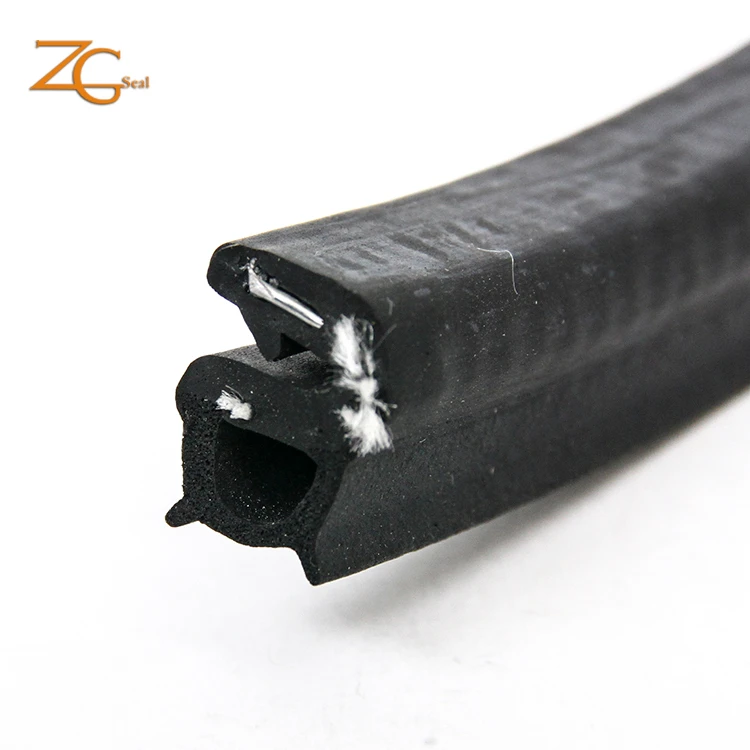
Extruded rubber is used in a wide range of applications, from Extruded Rubber Parts for industrial machinery to Edge Protection Rubber Profiles for construction and Silicone Sealing Strip for automotive and home use. The cutting method you choose depends on several factors, including the type of rubber, the required precision, and the volume of production.
Knife Cutting
One of the most common cutting methods for extruded rubber is knife cutting. This method is relatively simple and cost - effective, making it a popular choice for small - to medium - scale production. There are different types of knives that can be used, such as straight knives and circular knives.
Straight knives are great for making straight cuts on extruded rubber. They are easy to operate and can be adjusted to cut different thicknesses of rubber. For example, if you're cutting a thick rubber strip for an industrial application, a straight knife can get the job done efficiently. However, the precision of straight knife cutting may not be as high as some other methods, especially when it comes to complex shapes.
Circular knives, on the other hand, are more suitable for continuous cutting operations. They can cut through rubber more smoothly and quickly compared to straight knives. Circular knives are often used in high - volume production lines where speed is crucial. But they also have their limitations. They may not be as good at making sharp corners or intricate cuts as some other advanced methods.
Laser Cutting
Laser cutting is a more advanced cutting method that offers high precision and flexibility. In laser cutting, a high - energy laser beam is used to melt or vaporize the rubber, creating a clean and accurate cut.
One of the biggest advantages of laser cutting is its ability to cut complex shapes with ease. Whether you need to cut a rubber gasket with a very specific design or a custom - shaped rubber part for a high - tech application, laser cutting can handle it. The precision of laser cutting is extremely high, which means you can get very tight tolerances on your extruded rubber products.
Another benefit is that laser cutting is a non - contact method. This means there is no physical pressure applied to the rubber during the cutting process, which reduces the risk of deformation or damage to the rubber. However, laser cutting equipment is relatively expensive, and the operating costs can be high. So, it's more suitable for applications where high precision and complex shapes are required, and the production volume justifies the investment.
Water Jet Cutting
Water jet cutting is another interesting option for cutting extruded rubber. In this method, a high - pressure stream of water, often mixed with abrasive particles, is used to cut through the rubber.
Water jet cutting is known for its versatility. It can cut a wide range of rubber materials, including hard and soft rubbers. It's also a good choice for cutting thick rubber sections. Since water jet cutting uses water as the cutting medium, there is no heat generated during the cutting process. This is important because heat can sometimes cause the rubber to change its properties, such as its hardness or elasticity.
One of the drawbacks of water jet cutting is that it can be a bit messy. The water and abrasive mixture needs to be properly managed, and there may be some waste generated. Also, the cutting speed may not be as fast as some other methods, especially for thin rubber products.
Die Cutting
Die cutting is a traditional method that involves using a die, which is a specially designed tool, to cut the extruded rubber into specific shapes. Dies can be made in various shapes and sizes, depending on the requirements of the product.
Die cutting is very efficient for mass production. Once the die is made, it can be used to cut a large number of rubber parts quickly and accurately. It's commonly used for making standard - sized rubber products, such as rubber washers or gaskets.
However, the initial cost of making a die can be quite high. If you only need to produce a small number of parts, the cost of the die may not be worth it. Also, modifying a die to change the shape of the cut can be time - consuming and expensive.
Choosing the Right Cutting Method
So, how do you choose the right cutting method for your extruded rubber products? Well, it all boils down to your specific requirements.
If you're on a tight budget and need to make simple, straight cuts on a small - to medium - scale, knife cutting might be the way to go. It's a tried - and - true method that gets the job done without breaking the bank.
If precision and the ability to cut complex shapes are your top priorities, laser cutting is probably the best option. It may cost more upfront, but the quality and flexibility it offers are hard to beat.
For cutting thick rubber or a wide variety of rubber materials without worrying about heat - related issues, water jet cutting could be a good choice.

And if you're planning for large - scale production of standard - shaped rubber parts, die cutting is an efficient and cost - effective solution in the long run.
As a supplier of extruded rubber, we have experience with all these cutting methods. We can help you choose the most suitable method based on your product requirements, budget, and production volume. Whether you need Extruded Rubber Parts, Edge Protection Rubber Profiles, or Silicone Sealing Strip, we've got you covered.
If you're interested in our extruded rubber products and want to discuss your specific needs, don't hesitate to reach out. We're always happy to have a chat and find the best solution for you.
References
- "Rubber Processing Technology" by Maurice Morton
- "Handbook of Elastomers" edited by Brian M. Walker
So, that's a wrap on the cutting methods for extruded rubber. I hope this blog post has been helpful to you. If you have any questions or comments, feel free to leave them below. Looking forward to hearing from you and potentially working together on your next project!


