Introduction
Custom rubber molding tooling cost reflects the engineering investment required to turn a rubber component design into a manufacturable mold, rather than the unit price or raw material cost of the finished part. A tooling quote typically accounts for mold design, tooling materials, precision machining, surface finishing, trial runs, and dimensional validation, with the scope varying according to the component and production requirements. Understanding these cost drivers helps procurement teams compare engineering proposals, identify unnecessary complexity, and select a mold configuration that supports both product quality and long-term production efficiency.
What Goes Into a Rubber Molding Tooling Quote
A professional tooling quote should separate the main engineering and manufacturing activities so buyers can understand what they are paying for and compare proposals on a consistent basis.
Engineering & DFM Costs
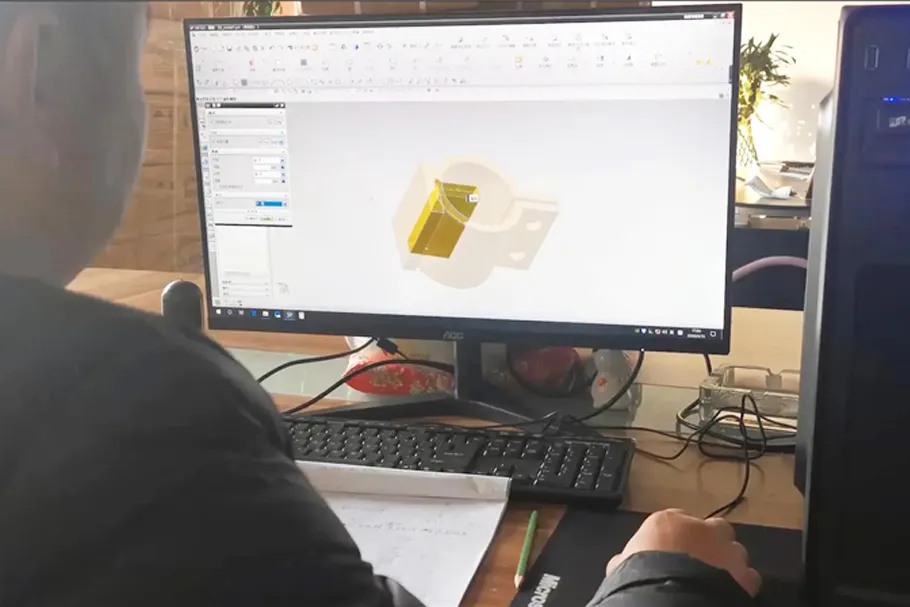
Engineers translate 2D drawings and 3D models into manufacturable mold designs using CAD/CAE tools such as UG/NX, while parting-line placement, draft angles, mold layout, and poka-yoke features influence design hours and the complexity of the final tooling structure.
Tooling Materials
The mold base provides structural support, while cavity and core inserts form the rubber component, and selecting P20, H13, NAK80, or aluminum for suitable applications affects material expenditure, machinability, achievable surface quality, and expected tooling life.
Machining & Surface Finishes
CNC roughing, high-speed finishing, wire EDM, and sinker EDM contribute different machining costs according to geometry and tolerance requirements, while texturing, mirror polishing, and suitable release-oriented coatings add processing steps when the application requires them.
Tryout & Quality Validation
Initial mold assembly, T1 trial runs, trial rubber consumption, dimensional inspection, and first article inspection (FAI) documentation contribute to validation costs, particularly when the buyer requires comprehensive measurement records or compliance with a defined quality system.
Three Engineering Factors That Drive Tooling Cost Differences
Even when two suppliers receive the same part drawing, their tooling quotes may differ because they propose different molding processes, cavity configurations, and levels of mechanical automation.
Molding Process & Tool Architecture

Compression Molding
A conventional compression mold generally uses upper and lower mold sections, making it a practical option for suitable rubber geometries when the design does not require extensive auxiliary mechanisms or complex automation.

Transfer Molding
A transfer mold incorporates a transfer pot and plunger to move rubber into the cavities, adding components and design considerations that can increase machining and assembly requirements.

Injection Molding
An injection mold may require precision injection channels, a cold or hot runner system where applicable, and specialized ejection or demolding mechanisms, increasing tooling complexity when compared with a simpler mold designed for the same application.
The appropriate process depends on rubber compound behavior, component geometry, dimensional requirements, production volume, and cycle-time targets, so buyers should compare technically suitable alternatives rather than assume one process always costs less.
Cavity Count & Production Economics
Single-Cavity Molds
A single-cavity mold typically requires less cavity machining and produces one component per molding cycle, making it useful for prototypes, specialized parts, or projects where demand does not justify a larger mold configuration.
Multi-Cavity Molds
Four-cavity, eight-cavity, and larger configurations can increase output per cycle, but additional cavities require more machining, tighter control of cavity-to-cavity consistency, and appropriate balancing of material distribution.
Lifecycle Cost Evaluation
Procurement and engineering teams should compare the initial tooling investment with estimated annual usage (EAU), expected product lifecycle demand, cycle time, scrap risk, maintenance requirements, and projected unit production costs before selecting a cavity count.
A higher cavity count does not automatically produce a better return on investment, because the economic advantage depends on actual demand, achievable production efficiency, mold durability, and the additional investment required to manufacture and maintain the tool.
Manual Inserts vs. Automated Mold Actions
Manual Inserts & Hand-Loading
Rubber components with undercuts or recessed features may require manually positioned inserts, allowing some complex geometries to be molded with a simpler mechanical structure but adding operator handling and cycle-time considerations.
Sliders & Lifters
Mechanical sliders, lifters, and other movable mold components can accommodate certain undercuts and complex geometries, but they introduce additional design, machining, assembly, and maintenance requirements.
Automated Mold Actions
Automated mechanisms can reduce repetitive manual handling and improve production consistency, although their higher upfront cost is justified only when expected production demand, labor savings, operating reliability, and cycle-time improvements support the investment.
The best configuration balances initial tooling expenditure against the operating conditions of the intended production program, rather than maximizing automation or minimizing the mold price in isolation.
How Zhonggao Helps Optimize Rubber Mold Tooling Investment
A well-planned tooling project can reduce unnecessary engineering expenditure without compromising component functionality, dimensional accuracy, or production requirements.
In-House Mold Design & DFM Collaboration
Zhonggao integrates mold design and manufacturing with rubber component engineering, allowing its team to review parting-line positions, draft angles, cavity layouts, and mechanical actions before machining begins, potentially avoiding unnecessary EDM operations or complicated mold mechanisms.
Customer-Owned Tooling & Intellectual Property Protection
When customers fund dedicated mold development, the ownership terms and permitted use should be clearly documented, supported by appropriate non-disclosure agreements (NDAs) and a commitment to restrict the tooling to the customer's designated production orders rather than unauthorized third-party use.
Flexible Tooling For Different Production Needs
Prototype tooling, single-cavity molds, and multi-cavity production molds can be evaluated against actual assembly requirements, projected demand, and expected production efficiency, allowing buyers to select a suitable investment without relying on an arbitrary minimum order quantity threshold.
An integrated mold development and manufacturing setup enables closer coordination between design reviews, machining decisions, and trial production, helping identify avoidable tooling complexity before it becomes a manufacturing expense. By combining mold engineering, in-house manufacturing, and project-specific tooling configurations, the supplier can support buyers in evaluating practical tooling options while protecting the intended function and production requirements of their rubber components.



Learn More About Ningbo Zhonggao
Conclusion
Evaluating rubber molding tooling cost requires more than comparing the final quoted amounts, because mold architecture, steel grade, cavity count, automation, validation scope, and expected tooling life all influence the value of the investment. Before approving a quote, buyers should request a clear breakdown covering the proposed molding process, mold materials, cavity configuration, estimated service life, trial requirements, inspection criteria, and any additional charges for revisions or maintenance. Submit your rubber component's STEP/IGS 3D drawing or a physical sample to request an engineering assessment and a detailed tooling development proposal tailored to your production requirements.
Get Your Tooling Development Recommendation