

Introduction
O-rings are critical components for sealing high-pressure washers, water pumps, and hoses. Incorrect selection can cause equipment leaks, reduced efficiency, and even downtime, while the right O-rings significantly extend equipment lifespan. This article will help you quickly master O-ring selection for these three types of equipment by covering general selection principles, equipment-specific solutions, and practical selection steps.
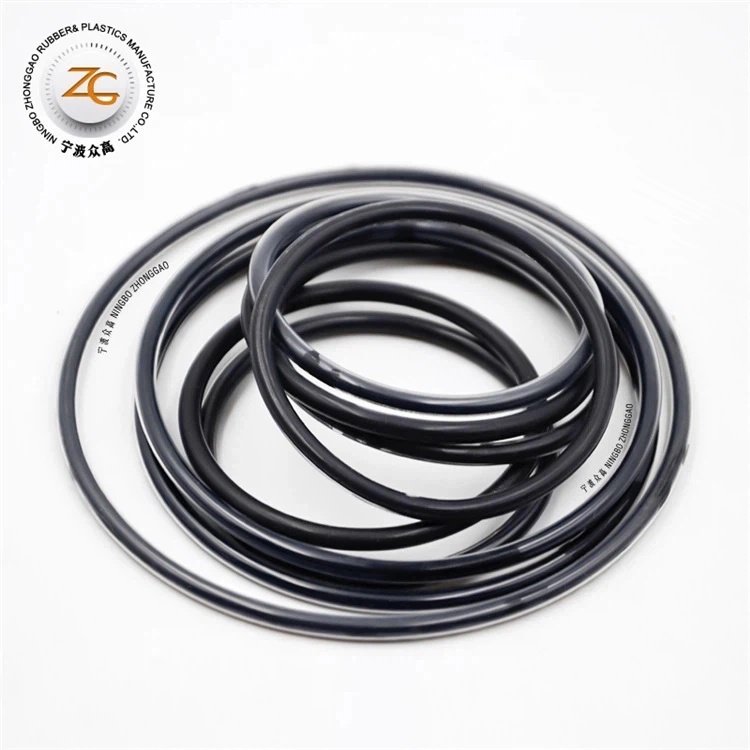
General Core Principles for O-Ring Selection
Selecting O-rings ultimately revolves around four key factors-material, operating conditions, dimensions, and performance priorities-each directly impacting sealing effectiveness.
Material Compatibility
Materials must match the equipment's media and operating environment to avoid swelling, cracking, or aging. Common materials and their applicable scenarios are as follows:
|
Material |
Tempature Range |
Key Properties |
Typical Use |
|
NBR |
-40℃ ~ 120℃ |
Oil resistant, low cost |
Oil-contaminated pumps, fuel hoses |
|
FKM / Viton |
-20℃ ~ 250℃ |
High-temp, chemical resistant |
High-pressure washers, chemical pumps |
|
EPDM |
-50℃ ~ 150℃ |
Ozone & aging resistant |
Freshwater pumps, outdoor hoses |
|
VMQ (Silicone) |
-60℃ ~ 200℃ |
Food-grade, non-toxic |
Food processing, freshwater devices |
|
PTFE |
-100℃ ~ 280℃ |
Corrosion & high-temp resistant; low elasticity |
Dynamic seals in sewage/chemical pumps |
Adaptability to Operating Conditions
O-rings must be compatible with the actual operating conditions, focusing on the following three aspects:
• Temperature: Equipment operating temperatures may be significantly higher than the ambient temperature. For example, outdoor water pumps in summer must account for both water temperature and solar heating. The material must cover the peak temperature range; otherwise, the O-ring will harden, crack, or lose its elasticity.
• Pressure: High-pressure applications require high-pressure-resistant materials, and backup rings should be used where necessary to prevent extrusion. Low-cost materials can be preferred for low-pressure applications, balancing sealing performance and cost.
• Motion Type: Static seals only withstand pressure and do not experience relative sliding. Dynamic seals experience friction and wear, requiring wear-resistant, elastic materials and controlled compression rates.
Dimensional Accuracy
Dimensional deviation is a common cause of seal failure, focusing on two key aspects:
• Key Parameters: The inner diameter (ID) and cross-sectional diameter (CS) are the most critical parameters and must match the equipment's seal groove dimensions.
• Compression Ratio: The compression ratio directly determines sealing effectiveness and O-ring life. For static seals, the compression ratio should be 12%-20%, and for dynamic seals, it should be 10%-15%. Excessively high compression ratios can lead to deformation, while excessively low compression ratios can cause leakage.
Performance Prioritization
Different equipment and application scenarios prioritize different O-ring performance attributes. Clarifying these priorities can help avoid over- or under-performance:
• Dynamic Seals: Frequent friction and movement require prioritizing wear resistance and elasticity to extend service life.
• High-Pressure Scenarios: High pressure and extrusion risk require prioritizing extrusion resistance, supplemented by backup rings.
• Outdoor Scenarios: Frequent bending and long-term exposure to sunlight/air require prioritizing aging resistance and UV resistance.
• Food-Grade Scenarios: Safety and non-toxicity are top priorities, with temperature adaptability as a secondary consideration.
O-Ring Selection for Specific Equipment
Operating conditions vary significantly between different equipment, so O-ring selection must be tailored.
High-Pressure Washers: Handling High Pressure and Chemical Media
High-pressure washers operate under high pressure, come into contact with various cleaning chemicals, and, in some cases, may generate frictional heat. Therefore, O-rings must strike a balance between pressure resistance, temperature resistance, and chemical resistance. Fluorocarbon rubber (FKM) is preferred because it withstands most cleaning agents and high-pressure environments. For food-grade applications, FDA-approved silicone is selected to ensure safety and non-toxicity. PTFE backup rings should also be added to high-pressure connections to prevent O-ring extrusion.

Water Pumps: Balancing Multi-Media Compatibility and Dynamic Seals
Water pumps operate under complex conditions (including freshwater, sewage, oil, or chemicals), requiring both dynamic seals (pump shafts) and static seals (flanges). Seal selection must consider the specific characteristics of the media:
• Freshwater pumps: These typically carry standard water media and operate in moderate ambient temperatures. Seals are typically static or low-friction dynamic seals. EPDM is used for its excellent elasticity, aging resistance, and ozone resistance, ensuring long-term sealing reliability.
• Sewage Pumps: The media contains particles and impurities, placing higher demands on seal wear resistance. PTFE/elastomer composite rings are used, with a PTFE outer layer to resist particle erosion and an inner rubber layer to provide elasticity, achieving a balance between wear resistance and sealing reliability.
• Oil-Contaminated Pumps: These pumps are used to pump mineral oil or lubricating oils and require seals that are both oil-resistant and heat-resistant. NBR offers excellent oil resistance and low cost, making it suitable for general sewage pump applications.
• Chemical Pumps: These pumps may come into contact with corrosive media such as acids, alkalis, and solvents, requiring high chemical resistance from O-rings. The use of FKM is resistant to most chemical solutions and high temperatures; for high-pressure applications, support rings can be added to prevent extrusion and ensure sealing reliability.

Hoses: Balancing Flexibility and Weather Resistance
Hose O-rings must withstand frequent bending and fitting insertion/removal, and resist UV rays and ozone for outdoor use:
• Freshwater or Outdoor Hoses: Transport freshwater or use outdoors, requiring elastic, aging-resistant O-rings for frequent bending and insertion/removal. Use EPDM for its excellent elastic recovery, UV resistance, and ozone resistance.
• Fuel Hoses: Need oil-resistant and solvent-resistant O-rings that maintain sealing during frequent bending and insertion/removal. Use Nitrile Rubber (NBR) for its excellent oil resistance and moderate hardness, ensuring dimensions strictly match hose fittings to avoid elasticity loss from overstretching.
• Lubricating Oil Hoses: O-rings withstand dynamic friction and pressure fluctuations when transporting lubricating oil. Use NBR or HNBR to balance oil resistance, wear resistance, and temperature resistance.

Step-by-Step Guide to Ensuring O-Rings Truly Fit Your Equipment
Follow these 5 steps to find the right O-ring:
Check Operating Parameters
Identify your equipment's media type, temperature range, and pressure rating, and organize this information into a simple table to intuitively determine the appropriate material and specifications.
01
Initial Material Screening
Select 2-3 candidate materials from commonly used materials based on media compatibility and operating conditions.
02
Confirm Dimensions
Review the original O-ring specifications in the equipment manual or measure the seal groove dimensions to determine the O-ring's inner diameter (ID) and cross-sectional area (CS).
03
Special Adaptations
Appropriate adjustments should be made based on specific operating conditions. For high-pressure applications, add a back-up ring; for dynamic seals, choose a wear-resistant material; and for food-grade applications, use a food-safe material.
04
Balance Cost
Choose a cost-effective material while maintaining core performance. For example, for a typical clean water pump, choose EPDM over the more expensive FKM to reduce maintenance and replacement costs.
05
Conclusion
Choosing the right O-ring is crucial for ensuring the long-term, reliable operation of high-pressure cleaners, pumps, and hoses. By selecting the O-ring material and size to the specific needs of your equipment, you can select the most suitable O-ring, effectively ensuring daily maintenance and production efficiency.
Ningbo Zhonggao is a leading custom O-ring manufacturer in China. We can customize high-performance O-rings in various aspects, including material, size, and structure, to meet your specific needs. Contact us for customized solutions.


