Introduction
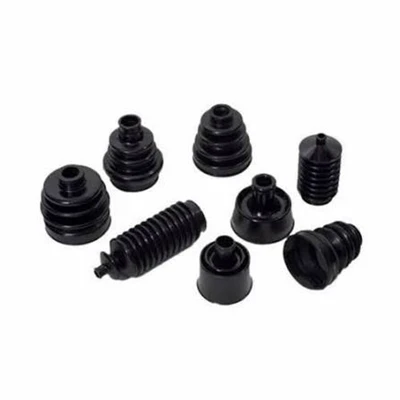
Rubber parts play a vital role in various industries such as automotive, machinery, electronics, and medical equipment. Most industries choose to customize rubber parts from rubber moulded parts manufacturers to meet their specific requirements. But how are custom rubber parts actually made? In this guide, we'll take a closer look at the entire production process of custom rubber components.

Understanding Customer Requirements
Before manufacturing custom rubber parts, rubber molding parts suppliers work closely with buyers to clarify their specific needs. Customers may provide technical drawings or physical samples for reference, along with details such as the required rubber material (e.g., NBR, EPDM, PTFE, FFKM), tolerance standards, structural design, and functional performance. Once all specifications are confirmed, the custom molded rubber parts manufacturer proceeds with mold design and initiates the rubber parts manufacturing process.
How to Make Rubber Parts
Next, let's take a closer look at the manufacturing process of molded rubber parts. Generally, the process can be divided into four main stages: the preparation stage, the molding stage, the post-processing stage, and the inspection & packaging stage.
1
Preparation
-
Raw Material Selection & Compound Design
-
Rubber Mixing Process
-
Pre-forming

Raw Material Selection & Compound Design
Raw Rubber: Determines the fundamental properties of the rubber product.
Vulcanization System: Converts rubber from a linear structure into a three-dimensional network, giving it elasticity.
Fillers: Carbon black is commonly used to improve the strength and wear resistance of rubber parts.
Protective System: Antioxidants help resist thermal-oxidative and ozone aging.
Processing Aids: Such as softeners and plasticizers, to improve processability.

Rubber Mixing Process
Internal Mixing – Rough Compounding
The rubber base material is combined with compounding agents in precise proportions. Using an internal mixer (e.g., Banbury mixer), the raw rubber undergoes rough mixing. This step includes plasticizing the raw rubber first, then gradually adding fillers, curing agents, oils, and other additives.
Open Milling – Refining and Sheeting
After rough mixing, the compound is transferred to an open mill, where it is further refined and sheeted into uniform strips or sheets. This makes it easier to handle and feed into the next processing stage.
Process Control – Temperature & Time
Temperature and time must be strictly controlled during mixing to ensure even dispersion of ingredients and prevent overheating. Typically, the mixing temperature ranges from 120°C to 150°C, and the duration is around 1–2 hours, depending on the rubber material.

Pre-forming
Extrusion – Producing Rubber Strips
The compound can be extruded into rubber strips, which are easier to handle and feed into molds for further processing.
Calendering – Producing Rubber Sheets
Calendering can be used to produce uniform rubber sheets with consistent thickness, suitable for larger or flat mold cavities.
Strip Cutting – Preparing Accurate Portions
Rubber strips or sheets may also be cut to specific weights and dimensions to match the mold requirements.
2
Forming Stage
This stage is the key step in determining the shape of different customized rubber parts. There are three main molding methods:


Compression Molding Rubber Parts
Compression molding process involves placing pre-weighed rubber compounds directly into a heated mold cavity, closing the mold, and applying pressure. Under the combined effect of heat and pressure, the rubber flows to fill the cavity and simultaneously undergoes vulcanization.
Advantages: Low mold cost; suitable for large products and small batch production.
Disadvantages: Lower efficiency; more flash (excess rubber at the edges); slightly lower dimensional accuracy.

Injection Molding Rubber Parts
Injection molding process involves heating and plasticizing the compounded rubber in the barrel of the machine, then injecting it at high pressure and speed into a closed heated mold, followed by pressure-holding vulcanization.
Advantages: Highest production efficiency; high level of automation; stable product quality; precise dimensions; minimal flash.
Disadvantages: High equipment and mold investment; suitable for large-scale production. This is currently the mainstream production method.


Extrusion Molding Rubber Parts
3
Post-Processing Stage
This stage is the key step in determining the shape of different customized rubber parts. There are three main molding methods:

Trimming finished rubber parts

Post curing rubber parts

Spray Teflon on the surface of rubber parts
4
Inspection & Packaging
-
Inspection
-
Packaging

check molded rubber parts

check molded rubber parts

check molded rubber parts
Dimensional inspection: Molded rubber parts manufacturers typically use calipers, projectors, and CMM (Coordinate Measuring Machines) to check whether the dimensions of the rubber parts meet specifications.
Rubber hardness testing: Using a Shore durometer to measure hardness.
Mechanical performance testing: Testing the tensile strength and elongation at break of the rubber parts.
Compression set testing: Evaluating the elastic recovery ability of the rubber parts.
Media resistance testing: Immersing the rubber parts in oils or other liquids to observe changes in volume and hardness.
Hot air aging test: Assessing heat resistance.
Comprehensive inspection: For O-rings and similar products, optical visual inspection machines are commonly used to check for surface defects such as bubbles, inclusions, or flash.

check molded rubber parts
Applications of Custom Rubber Parts
Customized rubber parts are widely used across various industries to provide essential functions such as sealing, vibration damping, insulation, and protection. The main application areas are as follows:
-

Automotive Industry
Seals and Gaskets: Engine gaskets, door seals, window seals - prevent fluid leaks and reduce noise.
Hoses and Tubes: Fuel lines, coolant hoses, air hoses - handle high pressure and temperature variations.
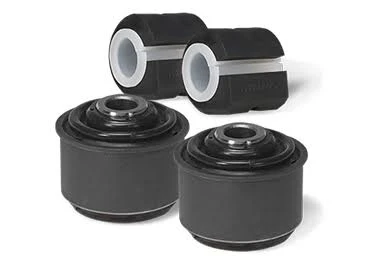
Vibration Dampers & Bushings: Minimize engine and chassis vibrations, enhance driving comfort and safety.
Weatherstrips: Protect against water, dust, and wind, improving cabin comfort. -

Industrial Machinery
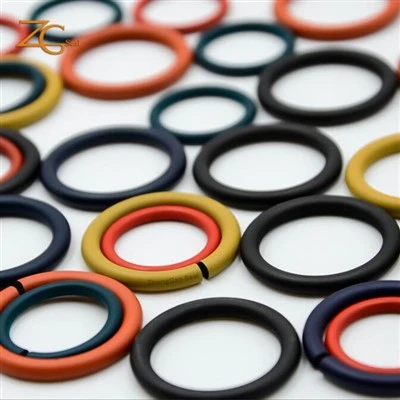
O-Rings & Seals: Maintain pressure and prevent leaks in hydraulic and pneumatic systems.
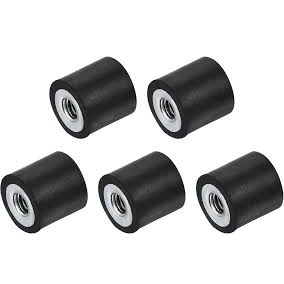
Vibration Isolators: Reduce vibration and noise from motors, pumps, and heavy equipment.
Custom Molded Parts: Protect sensitive components, provide cushioning, or act as spacers. -

Electronics & Electrical Industry
Waterproof Gaskets & Seals: Prevent water, dust, and humidity from entering enclosures.
Insulation Components: Prevent short circuits, enhance safety, and maintain device performance.
Shock Absorbers: Protect sensitive electronic modules from mechanical impact.
Custom Rubber Parts Solutions by Zhonggao
From the above, you now know how to cast rubber parts, and you may be wondering where to source high-quality, reliable custom rubber components. Zhonggao is a professional OEM/ODM manufacturer specializing in customized rubber parts since 2012. We focus on delivering tailor-made rubber solutions that precisely meet our clients' requirements. With over 10,000 types of custom rubber parts developed and years of extensive experience, we are fully equipped to provide solutions for all your rubber customization needs.
-
 High-Precision Production: We offer a full range of rubber parts manufacturing process, including injection molding, compression molding, and extrusion, to meet the shape requirements of various custom rubber parts.
-
 Strict Quality Control: After production, we conduct multiple inspections on dimensions, hardness, media resistance, and more to ensure product reliability.
-
 Customization Services: We can quickly develop and design parts based on customer drawings or samples, delivering samples within 3–15 days.
-
 Multiple Certifications: All of our custom rubber parts are produced in strict compliance with international standards, including IATF16949, ISO9001, ISO14001, and ISO45001.

Conclusion
The manufacturing of rubber parts involves a systematic process-from requirement analysis and material formulation to molding, post-processing, and strict quality control. With comprehensive customization capabilities, advanced molding technologies, and adherence to international quality standards, we ensure reliable solutions for clients worldwide.
Looking for A Trusted Custom Molded Rubber Parts Manufacturer?
Share your drawings or project requirements with us today, and our team will provide a quick quote along with tailored solutions for your application. Get in Touch with Us Now!