

Introduction
Automotive oil-resistant rubber seals are used where fuel, engine oil, lubricating grease, brake fluid, and transmission-related media may affect sealing performance. For buyers, the right rubber seals should match the working medium, seal structure, material properties, and long-term installation conditions.
What Are Oil-Resistant Rubber Seals in Automotive Applications
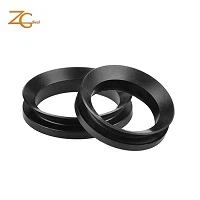
Oil-resistant rubber seals are sealing components designed for automotive positions exposed to oil, fuel, grease, brake fluid, or transmission-related media. They commonly include O-rings, oil seals, fuel cap seals, and brake cap seals. These seals belong to automotive rubber parts but exclude gaskets or extruded rubber profiles. In practical use, they help maintain sealing contact around ports, grooves, caps, shafts, and fluid-control areas where material compatibility and structural fit must work together.
Why Oil Resistance Matters for Automotive Rubber Seals
Automotive rubber seals may withstand exposure to oil, fuel, grease, brake fluid, heat, and movement. Oil resistance helps the seal maintain its shape, contact pressure, and sealing function under these operating conditions.
- Media Compatibility: The seal material should be compatible with exposure to mineral oil, fuel oil, hydraulic oil, brake fluid, lubricating grease, or synthetic oil.
- Sealing Stability: A suitable oil-resistant seal helps maintain contact pressure, groove fit, and compression performance over the long term in automotive assembly.
- Wear Resistance: O-rings and oil seals may experience friction or repeated movement, so wear resistance helps maintain consistent sealing over time.
- Temperature Adaptability: Engine, brake, and transmission areas may involve heat, so the seal material should match the expected temperature range.
- Material Fit: NBR, FKM, HNBR, ACM, or PTFE should be selected according to fluid type, motion, pressure, and installation position.
Common Seal Types Used in Automotive Oil-Resistant Applications
The main types of automotive oil-resistant rubber seals include O-rings, oil seals, fuel cap seals, and brake cap seals. The table below lists typical applications of these seals in automobiles and their respective main sealing uses:
|
Seal Type |
Product Image |
Typical Automotive Use |
Main Sealing Focus |
|
|
Fuel Ports, Fluid Connections & Connector Sealing |
Groove Fit, Compression & Material Compatibility |
|
|
|
Bearings, Gearboxes & Rotating Shaft Areas |
Lubricating Oil Retention & Dust Blocking |
|
|
|
Fuel Tank Cap & Fuel Filler Port |
Airtightness & Fuel Vapor Control |
|
|
|
Brake System Cap Area |
Brake Fluid Sealing & Moisture Blocking |



Which Materials Are Commonly Used for Automotive Oil-Resistant Seals
Material selection depends on the working medium, temperature, pressure, motion, and installation position. For automotive oil-resistant seals, buyers usually compare oil resistance, heat resistance, wear behavior, and chemical compatibility before confirming the final compound.
|
Material |
Best-Fit Seal Use |
Key Performance Focus |
Buyer Checkpoint |
|
NBR |
General Oil-Contact O-Rings & Seals |
Oil Resistance & Wear Resistance |
Oil Type, Hardness & Size |
|
FKM / Viton |
High-Heat O-Rings & Oil Seals |
Heat, Oil & Chemical Resistance |
Temperature & Fluid Exposure |
|
HNBR |
Automotive Oil-Contact Sealing |
Heat, Oil & Wear Balance |
Temperature & Fluid Type |
|
ACM |
Oil Seals & Powertrain-Related Seals |
Synthetic Oil & Heat Resistance |
Medium & Application Position |
|
PTFE |
Demanding Oil Seal Conditions |
Low Friction & Chemical Resistance |
Shaft Speed, Pressure & Structure |
|
FFKM |
Harsh Chemical Sealing Conditions |
Chemical Stability & High-End Sealing |
Fluid Compatibility & Cost Level |
For example, NBR rubber O-rings are often suitable for general oil-contact sealing, while Viton O-rings are preferred when heat, oil, and chemical exposure must be considered together.
How O-Rings and Oil Seals Differ as General Oil-Resistant Seal Structures
O-rings and oil seals are both used in automotive oil-resistant sealing, but their structures and working positions are different.
|
Comparison Point |
O-Rings |
Oil Seals |
|
Basic Structure |
Circular Elastic Ring |
Sealing Lip, Metal Case, Spring, Optional Dust Lip |
|
Main Contact Area |
Groove, Port, Fitting Surface |
Rotating Shaft, Housing |
|
Typical Sealing Mode |
Static, Dynamic Sealing |
Dynamic Shaft Sealing |
|
Automotive Fit |
Fuel Ports, Fluid Connections, Connector Sealing |
Bearings, Gearboxes, Transmission Areas, Rotary Shaft Positions |
|
Selection Focus |
Material, Hardness, Size, Compression |
Lip Material, Shaft Surface, Speed, Spring Design, Installation Fit |
|
Related Terms |
NBR Rubber O Ring, Viton O Ring, Custom O-Rings |
Shaft Oil Seal, Rotary Oil Seal, Radial Shaft Seal, Rotary Shaft Lip Seal |
What Buyers Should Confirm Before Ordering Automotive Oil-Resistant Rubber Seals
Before ordering automotive oil-resistant rubber seals, buyers should prepare clear application details. This helps the supplier confirm the material, structure, size, testing needs, and production feasibility more efficiently.
- Working Medium: Confirm whether the seal will contact mineral oil, fuel oil, hydraulic oil, brake fluid, lubricating grease, or synthetic oil.
- Seal Type: Specify whether the project needs O-rings, oil seals, fuel cap seals, brake cap seals, or custom molded rubber seals.
- Oil Seal Structure: For oil seals, confirm whether the application involves shaft oil seals, rotary oil seals, radial shaft seals, or rotary shaft lip seals.
- Application Position: Clarify the installation area, such as the fuel tank cap, brake system, gearbox, bearing area, rotating shaft, or connector sealing position.
- Material Requirement: Confirm NBR, FKM, HNBR, ACM, PTFE, or FFKM, or provide working conditions for supplier material advice.
- Size & Hardness: Provide inner diameter, wire diameter, groove size, Shore A hardness, compression requirement, and key tolerance details.
- Drawing or Sample: Share 2D drawings, 3D drawings, physical samples, installation position photos, order quantity, and expected production requirements.
- Testing Needs: Confirm whether oil immersion resistance, hardness, tensile strength, aging resistance, or wear resistance tests are required before bulk production.
What to Look for in an Automotive Rubber Seal Manufacturer
An automotive rubber seal manufacturer should support more than production alone. For oil-resistant sealing projects, buyers should review material advice, seal structure development, mold capability, sample validation, and quality control.
- Material Selection Support: The manufacturer should recommend NBR, FKM, HNBR, ACM, PTFE, or FFKM based on oil type, temperature, pressure, and motion.
- Seal Structure Development: The supplier should support O-rings, oil seals, fuel cap seals, brake cap seals, and custom molded rubber seals.
- Oil Seal Application Support: For shaft-related oil seals, the manufacturer should help confirm the shaft surface, rotation speed, lip material, spring design, and installation fit.
- Mold & Sample Capability: Reliable suppliers should develop molds from drawings, samples, or installation grooves, then provide samples for fit and performance checking.
- Testing & Quality Control: Key checks may include hardness, tensile strength, oil immersion resistance, wear resistance, aging resistance, and dimensional inspection.
- Automotive Project Experience: A reliable automotive rubber seal manufacturer, such as Ningbo Zhonggao, should support material advice, sample validation, and batch production for vehicle sealing systems.
Conclusion
Oil-resistant rubber seals help automotive systems maintain stable sealing, where oil, fuel, brake fluid, heat, movement, and installation fit must be considered together. The right solution depends on seal type, material compatibility, hardness, structure, working medium, and actual vehicle position. Contact us for custom automotive oil-resistant rubber seal solutions based on your drawing, sample, or application requirements.


