Introduction
Choosing the wrong O-ring for an application can lead to premature leakage, excessive wear, unplanned maintenance, and higher operating costs, even when the seal matches a standard size such as AS568 or a metric specification. The key difference in static vs dynamic O-ring selection is that static seals prioritize stable contact pressure and long-term sealing performance, while dynamic seals must also manage friction, wear, and heat generation. Before selecting a material or ordering custom seals, engineers should evaluate the movement type, operating conditions, gland geometry, and fluid compatibility.
Static vs. Dynamic O-Rings: Identify Your Operating Conditions
Before selecting an O-ring, determine whether the sealing surfaces remain stationary or move relative to each other, because each operating condition creates different performance demands.

1. Static Sealing
Applications such as flanges, threaded fittings, and fixed housings require consistent contact pressure, suitable compression, and resistance to the operating fluid and temperature.
2. Reciprocating Sealing
Hydraulic cylinder pistons and pneumatic actuators require wear resistance, controlled friction, and suitable gland geometry to reduce twisting, abrasion, and leakage during repeated linear movement.
3. Rotary Sealing
Rotating shafts and pump shafts require careful evaluation of rotational speed, lubrication, frictional heat, and shaft surface conditions to prevent rapid seal deterioration.
4. Oscillating Sealing
Hinges, articulated joints, and mechanisms with limited-angle movement require attention to starting friction, localized wear, and potential damage caused by repeated changes in movement direction.
Small vibrations or intermittent movement can also affect sealing performance, so engineers should assess the actual motion at the sealing interface rather than classifying an application solely by whether the equipment operates continuously.
Key Design Differences: Squeeze, Gland Fill & Surface Finish
Static and dynamic sealing require different compromises between contact pressure, available expansion space, and friction, so engineers should evaluate the following parameters together rather than selecting each independently.
Squeeze & Compression
Static O-rings commonly use approximately 15%–30% cross-section squeeze, while reciprocating dynamic designs may use around 8%–16%, depending on seal geometry, material, pressure, and application requirements.
Gland Fill
Static and dynamic glands both need sufficient empty volume to accommodate elastomer expansion caused by temperature changes or fluid absorption, while dynamic applications also require consideration of frictional heating and lubrication.
Inside Diameter Stretch
Excessive stretch reduces the O-ring's cross-sectional thickness and can compromise sealing performance, so engineers should control installation stretch according to the selected seal design.
Surface Finish
Static sealing surfaces generally prioritize smooth, defect-free contact, while dynamic surfaces require a finish that limits abrasion without compromising lubrication, with the appropriate roughness depending on movement type, speed, and sealing arrangement.
Pressure & Extrusion Clearance
Higher pressure and larger clearance gaps increase extrusion risks, so engineers should evaluate gland dimensions, material hardness, and backup-ring requirements before finalizing the design.
These values are preliminary design references rather than universal specifications, and the final dimensions should be checked against established O-ring design guidance and the actual operating conditions.
How to Match O-Ring Materials to Static and Dynamic Applications
Material selection should account for the operating fluid, temperature, pressure, motion, and lubrication, because no single elastomer provides the best performance across every sealing environment.

NBR: General Hydraulic & Pneumatic Sealing
Nitrile rubber offers useful oil resistance, mechanical properties, and cost efficiency for many hydraulic and pneumatic applications, while the appropriate hardness must balance flexibility, wear resistance, and extrusion control.
HNBR: Demanding Dynamic Conditions
Hydrogenated nitrile rubber can provide improved heat resistance, aging resistance, and mechanical durability compared with conventional NBR in suitable automotive, industrial, and oil-related applications.
FFKM: Aggressive Chemical Environments
Perfluoroelastomer O-rings can withstand many demanding chemical and high-temperature conditions, but engineers must verify compatibility with the specific chemical, operating temperature, and exposure duration.
Encapsulated O-Rings: Chemical Resistance
FEP- or PFA-encapsulated O-rings combine a chemically resistant fluoropolymer outer layer with an elastomeric core and may suit chemical processing, pharmaceutical equipment, and other demanding fluid-handling applications when the design accommodates their limited flexibility.
Coated O-Rings: Friction Control
Specialized coatings can reduce friction and help mitigate stick-slip during movement, although coating adhesion, durability, lubrication, and compatibility with the actual operating cycle must be evaluated before use.
For dynamic applications, material hardness alone does not determine service life; engineers should also assess friction, wear resistance, fluid compatibility, temperature, and extrusion resistance as a complete sealing system.
Common Selection Mistakes and How to Prevent Seal Failure
Many O-ring failures result from mismatches between the seal design and the real operating environment, making application-specific verification essential before production orders are placed.
Reusing a Static Design for Rotary Sealing
A seal intended for stationary service may experience excessive friction, heat buildup, and accelerated wear on a rotating shaft, so engineers should verify rotational speed, lubrication, and whether an O-ring is suitable for the intended rotary arrangement.
Ignoring Backup Rings Under High Pressure
When pressure and extrusion clearance exceed the seal's design limits, elastomer can be forced into the gap and become damaged through nibbling or tearing, making a properly specified PTFE backup ring an important option in suitable applications.
Choosing by Size Without Checking Compatibility
A dimensionally correct O-ring can still fail when its material, hardness, or gland design cannot withstand the operating fluid, temperature, pressure fluctuations, or movement.
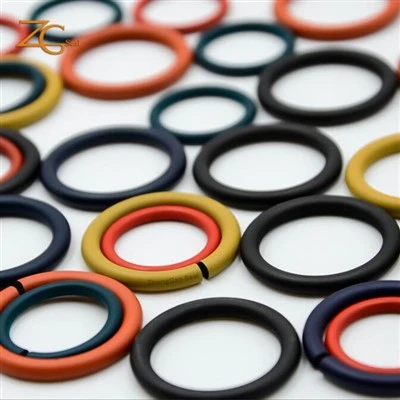
Ningbo Zhonggao offers O-ring solutions across multiple material and structural configurations, including encapsulated and coated options, to support application-specific sealing requirements. Its OEM/ODM capabilities can support custom dimensions and material selection, while sample development allows buyers to evaluate fit and application suitability before committing to bulk production.
Learn About Ningbo Zhonggao One-Stop Customized O-Ring Solution


Conclusion
Selecting between static and dynamic O-rings requires more than matching a standard size, because compression, gland geometry, material compatibility, friction, and operating conditions all influence sealing performance. Static applications generally prioritize stable contact pressure and long-term sealing, whereas dynamic applications must balance sealing force with wear, lubrication, and heat generation. Contact our sealing specialists with your drawings, dimensions, operating medium, temperature, pressure, movement type, and order quantity to request a tailored O-ring selection recommendation and quotation.
Request for Your O-Ring Selection
FAQs
Q: Can the Same O-Ring Be Used for Both Static and Dynamic Sealing?
A: Sometimes, but suitability depends on the gland design, elastomer properties, operating pressure, movement speed, lubrication, and service life requirements; a seal proven in static service should not automatically be approved for dynamic use.
Q: When Should a Dynamic O-Ring Use a PTFE Backup Ring?
A: A backup ring may be necessary when operating pressure, extrusion clearance, temperature, or material limitations create an unacceptable extrusion risk, and the decision should follow the seal manufacturer's design recommendations.
Q: What Information Should I Provide When Ordering Custom O-Rings?
A: Provide a technical drawing or dimensions, operating medium, temperature range, pressure, movement type and speed, lubrication conditions, required material or hardness, annual demand, and sample requirements so the supplier can assess the application and recommend a suitable configuration.