


Hey there! As a supplier of extruded rubber, I've been dealing with all sorts of questions about the rubber extrusion process. One question that pops up quite often is: "What is the pressure during the extrusion of extruded rubber?" Well, let's dive right in and break it down.
First off, rubber extrusion is a manufacturing process where raw rubber material is forced through a die of a specific cross - sectional shape. It's like squeezing toothpaste out of a tube, but a whole lot more technical. The pressure during this process plays a crucial role in determining the quality and properties of the final extruded rubber product.
The Basics of Pressure in Rubber Extrusion
When we talk about the pressure in rubber extrusion, we're referring to the force applied to the rubber material as it moves through the extruder. This pressure is what shapes the rubber into the desired form and ensures that it fills every nook and cranny of the die.
The pressure is generated by the screw mechanism inside the extruder. The screw rotates, pushing the rubber forward and building up pressure. The amount of pressure required depends on several factors.
Factors Affecting Extrusion Pressure
Rubber Material Properties
Different types of rubber have different viscosities. For example, natural rubber has a relatively low viscosity compared to some synthetic rubbers. A rubber with high viscosity will require more pressure to extrude because it doesn't flow as easily. We offer a variety of rubber materials, including the ones used in our Extruded Rubber Strip. These strips are made from carefully selected rubber compounds, and the extrusion pressure is adjusted accordingly to achieve the best results.
Die Design
The shape and size of the die are also important. A die with a complex cross - sectional shape will need higher pressure to ensure that the rubber fills the entire die cavity. For instance, our Rubber U Channels have a U - shaped cross - section. The extrusion process for these channels requires a specific amount of pressure to maintain the shape and dimensions accurately.
Extrusion Speed
The speed at which the rubber is extruded also affects the pressure. If we increase the extrusion speed, the pressure may need to be adjusted. A faster extrusion speed generally requires more pressure to keep the rubber flowing smoothly. However, increasing the pressure too much can lead to issues like surface defects on the extruded product.
Measuring and Controlling Extrusion Pressure
We use pressure sensors in our extruders to measure the pressure during the extrusion process. These sensors are placed at strategic points, such as near the die and along the barrel of the extruder. By constantly monitoring the pressure, we can make real - time adjustments to ensure that the extrusion process runs smoothly.
Controlling the pressure is crucial for producing high - quality extruded rubber products. If the pressure is too low, the rubber may not fill the die completely, resulting in a product with inconsistent dimensions or voids. On the other hand, if the pressure is too high, it can cause excessive wear on the extruder components and may even damage the die.
Effects of Pressure on Extruded Rubber Products
Dimensional Accuracy
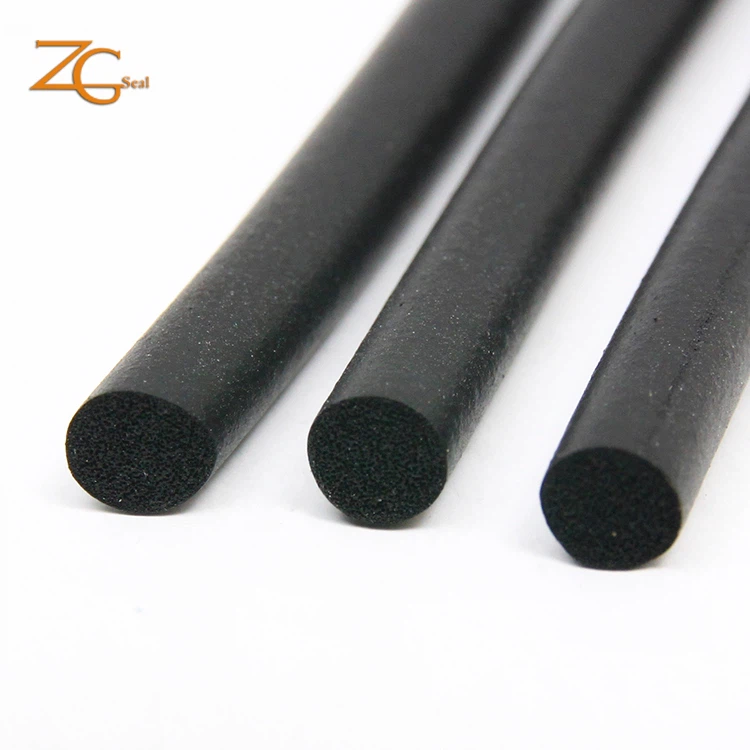
Proper pressure control is essential for achieving accurate dimensions. When the pressure is right, the rubber fills the die uniformly, resulting in a product with precise dimensions. Our Neoprene Sponge Cord is a great example. The extrusion pressure is carefully controlled to ensure that the cord has the correct diameter and length.
Physical Properties
The pressure during extrusion can also affect the physical properties of the rubber. For example, it can influence the density of the extruded rubber. Higher pressure can sometimes lead to a more dense and stronger product. However, this needs to be balanced with other factors to avoid negative effects on other properties like flexibility.
Challenges in Maintaining Optimal Pressure
One of the main challenges we face is dealing with variations in the rubber material. Even if we source the rubber from the same supplier, there can be slight differences in the properties from batch to batch. These variations can affect the extrusion pressure. To overcome this, we have a quality control process in place. We test each batch of rubber before extrusion to determine the appropriate pressure settings.
Another challenge is the wear and tear of the extruder components. As the screw and the barrel of the extruder get worn out over time, the pressure - generating capacity may change. We regularly maintain and replace these components to ensure consistent pressure during extrusion.
Conclusion
In conclusion, the pressure during the extrusion of extruded rubber is a critical factor that affects the quality, shape, and physical properties of the final product. It's influenced by various factors such as rubber material properties, die design, and extrusion speed. At our company, we've got the expertise and the technology to control this pressure accurately.
If you're in the market for high - quality extruded rubber products, whether it's Extruded Rubber Strip, Rubber U Channels, or Neoprene Sponge Cord, we're here to help. We can work with you to understand your specific requirements and provide the best - suited extruded rubber solutions.
If you're interested in learning more or starting a procurement discussion, feel free to reach out. We're always happy to chat about your needs and how we can meet them.

References
- "Rubber Extrusion Technology" by John M. Crawford
- "Handbook of Rubber Technology" edited by Maurice Morton


